
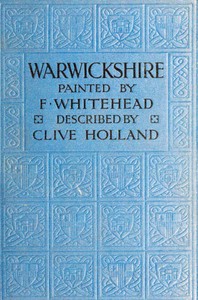
Warwickshire: The Land of Shakespeare by Clive Holland
Clive Holland's Warwickshire: The Land of Shakespeare isn't a novel with a plot in the traditional sense. Its story is the journey itself. Published in the late 19th century, the book documents Holland's travels through the English county most famous as the birthplace of William Shakespeare. He walks the lanes, visits the historic towns like Stratford-upon-Avon, Warwick, and Kenilworth, and describes the rolling countryside with a painter's eye for detail. The narrative is driven by his quest to connect the physical landscape to the literary giant it produced. He visits the famous sites—the Birthplace, the church, the farms—but also seeks out the quieter, less-changed corners, believing they hold the true spirit of the place that shaped the world's greatest playwright.
Why You Should Read It
You should read this for the atmosphere. Holland writes with such palpable affection that you can almost smell the damp earth and hear the river Avon. It's a double-layered historical trip: you're seeing Shakespeare's county through the eyes of a Victorian writer. This gives it a unique, slightly melancholic beauty. Holland is often noting what's still preserved and what's vanishing, making the book a snapshot of a specific moment in time. It’s less about academic analysis and more about feeling a connection. He argues, gently, that to understand the scope of Shakespeare's imagination—from fairy forests to royal castles—you need to understand the land that offered him that raw material. It makes the plays feel more grounded and real.
Final Verdict
This is a perfect, cozy read for anyone who loves Shakespeare, English history, or classic travel writing. It's for the reader who enjoys a slow, descriptive ramble more than a fast-paced thriller. If you've been to Warwickshire, it will deepen your memories. If you haven't, it will fuel your desire to go. It's also a fascinating piece for those interested in how Victorians viewed their own history and landscape. Just don't expect shocking revelations or a critical biography of Shakespeare; the star here is the land itself, lovingly observed and brought to quiet, vivid life.
This text is dedicated to the public domain. Knowledge should be free and accessible.



Joseph Hernandez
1 year agoThe index links actually work, which is rare!