
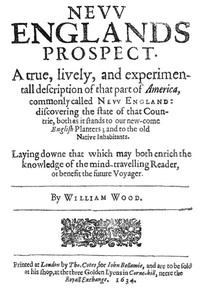
New Englands Prospect by active 1629-1635 William Wood
So, what exactly is this book? Published in 1634, New Englands Prospect is part promotional pamphlet, part survival guide, and part naturalist's journal. William Wood spent several years in the Massachusetts Bay Colony, and he wrote this to give folks back home a true sense of the place. He wasn't a famous leader; he was an observer with a sharp eye and a clear mission: to report what he saw.
The Story
There's no traditional plot. Instead, Wood takes you on a guided tour. He starts with the coastline, describing harbors and landmarks for future sailors. Then he moves inland, cataloging everything: the trees (so tall you'd think they touch the sky), the animals (from beavers to 'skunks,' which he finds utterly foul), and the rivers teeming with fish. He gives practical advice on farming, building, and dealing with the climate. A huge section is devoted to the Native people—their appearance, customs, language, and settlements. He describes them with a mix of curiosity, respect, and the clear bias of his time. The whole book is his argument: yes, it's hard work, but look at this opportunity.
Why You Should Read It
You read this for the voice. Wood's personality jumps off the page. He's exasperated by mosquitoes, amazed by the size of the lobsters, and genuinely trying to make sense of a culture entirely new to him. It removes the dusty veil of history. When he lists the words of the Algonquian language, you're hearing an early attempt at communication. When he complains about the winter, you feel that chill. It's the ultimate primary source. You're not getting a historian's analysis 400 years later; you're getting the messy, immediate impressions of a man standing in the woods, trying to explain it all to someone who's never seen it.
Final Verdict
Perfect for history buffs who want to go beyond dates and battles, and for anyone who loves travel writing or nature journals. If you've ever wondered what the first European settlers really thought when they stepped ashore, this is your backstage pass. It's short, packed with weird and wonderful details, and offers a direct line to a moment when America was, to English readers, still a strange and uncertain prospect. Just be ready to read it with a critical mind, understanding it's one man's perspective from a very different world.
This text is dedicated to the public domain. Enjoy reading and sharing without restrictions.
Matthew Johnson
6 months agoThe balance between academic rigor and readability is perfect.
Joshua White
1 year agoFinally found time to read this!
Carol King
4 months agoUsed this for my thesis, incredibly useful.

Margaret Lee
10 months agoI appreciate the objective tone and the evidence-based approach.