
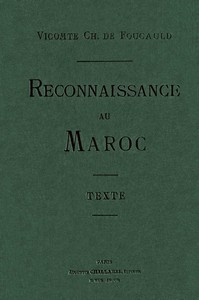
Reconnaissance au Maroc, 1883-1884 (Texte) by Charles de Foucauld
Let's be clear from the start: this is not a polished adventure tale. 'Reconnaissance au Maroc' is the raw field notes of a dangerous journey, published almost as Foucauld wrote them. It drops you right into the dust and uncertainty of 1883.
The Story
The 'plot' is the mission itself. A young, disillusioned French officer, Charles de Foucauld, sets out to correct blank spots on the map of Morocco. Since Europeans were forbidden, he transforms into 'Rabbi Joseph Aleman.' We follow him as he hires local guides, navigates suspicion in marketplaces, and carefully measures distances and landmarks. There's no single villain, but a constant, low-grade threat of exposure. The drama comes in small moments: a tense encounter with a local official, the struggle to hide his compass, the physical hardship of desert travel. The book ends not with a grand conclusion, but with the completion of his covert survey. The real story is the one happening inside Foucauld, which this journal only hints at.
Why You Should Read It
You read this for the unfiltered glimpse into a vanished world. Foucauld isn't a lyrical writer; he's an observer. That's what makes it powerful. You get lists of tribes, descriptions of fortifications, and notes on local economies—the kind of details a spy would need. But between the lines, you sense his loneliness, his constant calculation, and his growing respect for the people and land he's secretly studying. It's the ultimate 'you are there' experience for a very specific kind of armchair exploration. Knowing that this restless seeker would later become a hermit living among the Tuareg adds a profound layer of context to his earlier hunger for knowledge and belonging.
Final Verdict
This book is a niche treasure. It's perfect for history buffs who love primary sources, readers fascinated by exploration and geography, or anyone following the strange, compelling arc of Charles de Foucauld's life. If you want a fast-paced narrative, look elsewhere. But if you're willing to walk alongside a man in disguise, feeling every cautious step through forbidden cities and deserts, this journal offers a unique and authentic thrill. It's the gritty, unromantic precursor to every desert adventure story you've ever loved.
Legal analysis indicates this work is in the public domain. Knowledge should be free and accessible.
John Lee
2 months agoI appreciate how this edition approaches the core problem, the emphasis on ethics and sustainability within the topic is commendable. A rare gem in a sea of mediocre content.
Mary Williams
1 year agoAs a professional in this niche, the author’s unique perspective adds a fresh layer to the discussion. It’s hard to find this much value in a single source these days.
William Thomas
3 weeks agoClear, concise, and incredibly informative.
Richard Rodriguez
1 year agoThis digital copy caught my eye due to its reputation, the insights into future trends are particularly thought-provoking. Top-tier content that deserves more recognition.



Joseph Davis
7 months agoHaving explored several resources on this, I find that the bibliography and references suggest a high level of research and authority. The price-to-value ratio here is simply unbeatable.