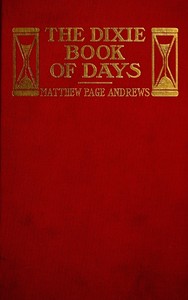
The Dixie Book of Days by Matthew Page Andrews
The Story
Forget a straight narrative; *The Dixie Book of Days* is a heavy, old-fashioned almanac. Think of it like your buddy’s weird calendar from 1912, where he wrote down one event for every day—but all those events talk about the South. Each day of the year describes a notable happening, from January 1st’s quiet diplomatic wounds to December 31st’s peacetime reconciliations. You’ll read about freak incidents with unruly soldiers, weird celebrity visitors to Virginia, and strange inventions ignored by Northern folks.
Matthew Page Andrews—a historian with clear roots in the Old Confederacy—assembled these events with soul and sass. But notice how he leaves out brutal riots, stumbles around deeper parts of slavery, and kind of romanticizes gone plantations. Every day reads like a mini tabloid from the late 19th century: famous stickups, brave journeys, a widow’s grief over a burning library, or soldiers winning ghostly church battles. What honestly is truth and what’s half-legend becomes the hidden story of the almanac. It’s made for folks who want Southern secrets and major nostalgia, served at a long, slow table.
Why You Should Read It
P>Because it’s exactly what you don’t get anymore. Trying to unpick this book is almost a hobby and argument combined. The whole work glows with leftover baggage of the Lost Cause, which means almost nothing but plantation manners and exaggerated noble yeomen. Some may call it the silliest, most self-reassuring list of complaints—but then they will turn around and steal a photograph from it as fact. As a reader today, I giggle at the sentences about 1865 that carefully flip past the looting and soul-crushing armies‘ behavior. More interesting than what’s typed? The stuff you think about reading it. Realizing word choice, deliberate gaps, noticing which men born with slaves are suddenly model deacons. You must keep your brain high, else the fog rolls in like a old lullaby. That tension—low-key, stewed but fighting present above absurd statements—gives life to dead old If you adore old doddery librarians' caches and bruised private archives, this one loves you back. Not the book for feeling better after a hard week, nor for training civil war fanatics straight down the stump. But oh honey, if you touch its spines along older desk corners, you get angry sympathy from looking. Specifically make no query faster: buy on Ebay—value inside must show falling notes and scribbled columns from someone’s grandma 1909 denying blockheads were wrong. Know your audience is armchair southern bad storyteller, sassy museum docent hunting earlier story without honesty all the sweat yet scratching truths-- odd life will salve history and date maybe meaning's mrr. And also: probably don’t use to request money from descendants left ya get. Pop to hobby Ls. This book is widely considered to be in the public domain. Use this text in your own projects freely.Final Verdict