
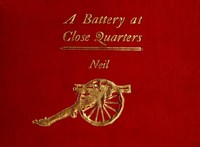
A Battery at Close Quarters by Henry M. Neil
Forget the sweeping, bird's-eye views of the Civil War. Henry Neil's A Battery at Close Quarters plants you firmly in the mud, smoke, and deafening roar of an artillery position. Neil, who commanded Battery B, 1st Ohio Light Artillery, wrote this account to correct the historical narrative surrounding his unit's actions, particularly at the bloody Battle of Shiloh.
The Story
The book follows Battery B from its formation in Ohio through its early service and into the heart of the war's western theater. The core of the story is the Battle of Shiloh in April 1862. Neil describes the sudden, violent Confederate attack that caught the Union army by surprise. His battery was positioned in a vulnerable spot and became a focal point of the fighting. He details the frantic efforts to hold the line, the overwhelming enemy assault, and the battery's eventual capture after a fierce, hand-to-hand struggle. The narrative is less about grand strategy and more about the immediate, terrifying experience of command under immense pressure.
Why You Should Read It
This isn't a dry history. It's a passionate defense. You can feel Neil's frustration and pride on every page. He's not just recounting events; he's making a case for his men's bravery, contesting official reports he believed were unfair. This personal stake makes it incredibly compelling. You get the commander's perspective—the weight of responsibility, the split-second decisions, and the haunting memory of loss. It strips away the romance of war and shows its chaotic, brutal reality. Neil’s voice is direct and often pointed, which makes the history feel alive and argued, not just presented.
Final Verdict
Perfect for readers who think they've heard all the Civil War stories. This is for anyone who wants a ground-level, command-eye view of a famous battle, full of gritty detail and personal conviction. It's especially great if you're interested in the artillery corps or the human struggle behind historical facts. If you prefer your history clean, neutral, and purely analytical, Neil's passionate bias might frustrate you. But if you want to understand how memory and honor fueled the writing of history just as much as facts did, this is a fascinating and gripping read.
This content is free to share and distribute. Distribute this work to help spread literacy.
Ashley Jones
2 months agoRight from the opening paragraph, the visual layout and supporting data make the reading experience very smooth. This has become my go-to guide for this specific topic.
Ashley Hernandez
9 months agoIt took me a while to process the complex ideas here, but the objective evaluation of the pros and cons is very refreshing. Highly recommended for those seeking credible information.
Richard Garcia
1 month agoRight from the opening paragraph, the logic behind each conclusion is easy to follow and verify. It cleared up a lot of the confusion I had previously.
Emma Lee
6 months agoSurprisingly enough, it challenges the reader's perspective in an intellectual way. Truly inspiring.
David Lee
9 months agoIt’s refreshing to see such a high standard of digital publishing.