
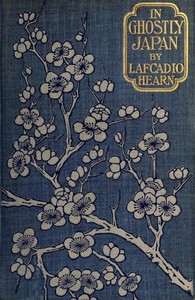
In Ghostly Japan by Lafcadio Hearn
Lafcadio Hearn wasn't just a writer visiting Japan; he fell in love with it, married into a samurai family, and became Koizumi Yakumo. 'In Ghostly Japan' is a collection of his essays and stories from that time. It doesn't follow one plot. Instead, it's a series of windows into a world where the supernatural is normal. He writes about Buddhist rituals for the dead, the legends behind everyday objects, and encounters with people who tell him their ghost stories with complete sincerity.
The Story
There isn't a single story. Think of it as a scrapbook of the strange and spiritual. One chapter might describe the haunting sound of a temple bell heard across a misty valley. Another recounts a folk tale about a mirror that holds a person's soul. Hearn listens to a priest explain why some places feel heavy with memory, or he reflects on a festival where lanterns are floated down a river to guide spirits home. He connects these moments to Japanese art, religion, and the simple routines of life. The 'plot' is his journey of understanding, showing us how ghosts aren't just for scary stories—they're part of history, family, and the landscape itself.
Why You Should Read It
I love this book because it's so peaceful. Hearn's writing isn't frantic or frightening; it's respectful and curious. He doesn't try to prove or disprove anything. He just shows us what he saw and heard, and in doing so, makes us feel the weight and beauty of tradition. The real charm is in the small details: the description of twilight, the feel of old paper, the sound of a name spoken in reverence. It makes you slow down. You start to think about the stories held in your own home or town. The 'ghosts' here often feel more sad or lonely than evil, and that makes them deeply human.
Final Verdict
This book is perfect for anyone who loves culture, folklore, or just beautiful writing. It's great for readers who enjoy quiet, thoughtful books over action-packed ones. If you're interested in Japan, this is a classic that goes deeper than any travel guide. It's also a wonderful read for a rainy day or before bed—it's atmospheric without being scary. Just don't go in expecting a thriller. Go in expecting to be transported to a quieter, more thoughtful world, one where even a shadow on the wall might have a story to tell.
This title is part of the public domain archive. Knowledge should be free and accessible.









Ashley Smith
2 months agoI decided to give this a try based on a colleague's recommendation, the transition between theoretical knowledge and practical application is seamless. This should be on the reading list of every serious professional.