About 117 minutes
Ruysbroeck and the Mystics: with selections from Ruysbroeck — Inside the Classic
Ethics
26,733 recorded words. 6 minutes difference from this book's estimate.
View Gutenberg source #66820
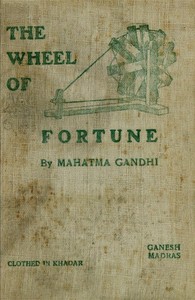
This digital edition of The Wheel of Fortune — Inside the Classic is described by source-level measurements including 28,079 words, 2 hr 3 min estimated reading time, and 3 detected text sections.
The text analysis averages about 18.8 words per sentence, while the detected sections provide another way to judge how the source is divided.
Project Gutenberg metadata also associates the work with “Manufactures -- India,” connecting these edition facts with the source record’s subject description.
Explore this collection
These alternatives are selected using recorded categories and estimated reading time.
About 117 minutes
Ethics
26,733 recorded words. 6 minutes difference from this book's estimate.
View Gutenberg source #66820About 132 minutes
Ethics
30,281 recorded words. 9 minutes difference from this book's estimate.
View Gutenberg source #41559About 114 minutes
Ethics
26,159 recorded words. 9 minutes difference from this book's estimate.
View Gutenberg source #58393Search stored excerpts and compare books → Choose by your preferences →
Choices use stored catalog measurements. Estimates vary with reading speed. A shared category is a catalog label, not a claim that two books have the same argument or literary quality.
Search reads excerpt text stored with this catalog and links to its associated Gutenberg record. The connection is stored in the site database; this tool does not recheck that every excerpt is word-for-word identical to that external record. Excerpt search does not cover every chapter and does not verify historical publication dates.
Catalog snapshot checked: 2026-09-26. Coverage: 94 public books, 94 available source excerpts.
Calculated from edition completeness, EPUB availability, text structure and catalogue metadata. Not a user rating.
Total of 100 points, scaled to a 2.5-5.0 range. Editions with an empty description or a missing EPUB file are not scored.
Public-domain source text
The source text is kept in the dedicated reader, separate from this catalogue record and its commentary.
The volume opens with a table of contents that immediately signals its dual structure: a first section on Swadeshi and a second on spinning, followed by appendices on weaving-school models. The commentator, Dvijendranatha Thakura, provides an appreciation that frames Gandhi's arguments as a response to critics who see simpler methods as a 'relapse into a primitive condition.' This editorial note traces how Gandhi's prose shifts between technical instruction—detailing spindle thickness and loom types—and exhortatory addresses to students and mosque-goers, where the charkha becomes a 'bloodless revolution' weapon.
Gandhi repeatedly elevates the spinning wheel from a tool to a doctrine. In a speech opening the National College in Calcutta, he declares, 'That is the doctrine of Charka,' and urges listeners to 'work up this doctrine' as a peaceful battle. The language is deliberately repetitive and incantatory: the charkha will 'speak out,' and its revolutions will bring success 'the nearer every day.' This rhetorical strategy transforms a manual activity into a quasi-religious discipline. The excerpts show Gandhi addressing different audiences—students, professors, and the general public—with a consistent insistence that spinning is not merely economic but salvific. He draws a parallel to wartime mobilization, telling Bengal's youth to 'devote all their time and energy to spinning' as a sacred duty. The voice is urgent, moralistic, and unapologetically didactic.
The book's pacing varies markedly between its sections. In the Swadeshi portion, Gandhi writes in a measured, analytical tone, dissecting the economics of foreign cloth boycott and the organization of Swadeshi stores. Sentences are longer, with careful enumeration of steps. But in the spinning section, the prose accelerates into shorter, more rhythmic clauses, especially in the speeches. For instance, the phrase 'every revolution of the Charka I can assure you, will bring the success of this bloodless revolution the nearer every day' uses parallelism and direct address to create momentum. The appendices, by contrast, revert to a dry, instructional register, listing model weaving-school curricula and the advantages of thin spindles. This alternation between technical manual and prophetic sermon gives the collection a layered texture, though the excerpts do not reveal how these modes interact across the full book.
Gandhi repeatedly invokes a specific historical narrative: the charkha brought traders to India, who then became rulers with Indian cooperation, and now the same charkha will drive them out. This motif appears in the National College speech and echoes through the excerpts. The wheel is personified as an agent of history—'the Charka itself' will speak to Europe. Another recurring detail is the placement of charkhas in mosques, where '800 Charkas had been ordered' so that worshippers could produce yarn. This concrete image ties the spinning wheel to religious practice and nonviolent resistance. Gandhi also distinguishes among spinners: peasant women who spin for livelihood, townspeople who may weary of a fad, and schoolchildren who represent the greatest hope. These categories suggest a social taxonomy embedded in the argument, though the excerpts do not fully develop it.
Readers should attend to the tension between Gandhi's practical instructions—such as sizing handspun yarn or organizing a weaving school—and his visionary claims for the charkha as a tool of national regeneration. The book's structure, moving from economic analysis to moral exhortation to technical appendix, mirrors this dual purpose. Pay particular attention to how Gandhi adapts his voice for different contexts: the calm economist, the fiery orator, the patient teacher. The excerpts offer only fragments of these registers, but they suggest a work that is as much about persuasion as about production.
There’s something humbling about watching a man turn a simple tool into a testament of will, as Gandhi does with the wheel. It makes me think of other quiet reckonings with legacy. I often find myself returning to the same worn pages of Ecce Homo! Or, A Critical Inquiry into the History of Jesus of Nazareth Being a Rational Analysis of the Gospels — Edition Insights, wondering how much of our own truth we can bear to examine, and how much we simply need to hold close.
Use these questions to collect your thoughts before moving on.